• Home
  • about
  • speaking
  • Newsletter
  • blog
  • contact
  • Home
  • about
  • speaking
  • Newsletter
  • blog
  • contact

Denise Howell

denise@howell.net

Inbox 5K

June 05, 2019  /  Denise Howell

inbox5K.png

This is Inbox 5K! Thanks for subscribing. Let’s get to it.

The FTC is Having a Moment — Even Though it Hasn’t Done Anything Yet:

That fine against Facebook for data mishandling and privacy trampling hasn’t happened yet, but $3-5 billion is the number estimated in the company’s quarterly earnings report. Some think $5 billion won’t even phase Facebook. Even if so, that’s not Facebook’s only concern. Its shares are roller-coastering on news that it and Amazon are under the FTC’s authority in determining whether the companies are running afoul of U.S. antitrust laws. According to the WSJ, the DOJ has dibs on investigating Alphabet/Google and Apple for antitrust, which means of course that Google’s, Apple’s, and Amazon’s share prices are in flux as well.

Though all this smacks of of high schoolers divvying up their science project duties, Fred Vogelstein and Nitasha Tiku at Wired explain why The New Antitrust Scrutiny Should Worry Silicon Valley. Namely, the EU has been active in this area and the U.S. playing aggressive catch-up may well have election-cycle value. It’s worth noting that Microsoft, with its own storied antitrust history, doesn’t seem to be one of the topics in this particular science, er, antitrust project.

Happy Bday GDPR:

It’s just over a year since the EU enacted the GDPR. Here’s some of the fallout:

  • UK thinktank BounceX (whose motto is “Market to People, not Cookies”) finds that “UK consumers feel positively about GDPR and generally trust companies to use their data correctly,” but “Despite this positive sentiment surrounding GDPR, consumers haven’t noticed much of a change in their online experience or behaviors.” Also, “Consumers aged 18-34 are both more aware of and more receptive to GDPR than those 44+.”

  • Snow Software’s survey revealed that while some feel more protected, others still feel vulnerable, and EVERYONE hates the flurry of pop-ups and opt-ins thirsty for consent before you can continue.

  • Thinktank Information Technology and Innovation Foundation (ITIF) thinks that some time around its second birthday the GDPR should be evaluated to see where it has worked and where it could use improvement.

Different Browsers, Different Tasks: Do you have different email addresses you use for different things? Work, personal, commercial interactions (so the spam they send you after goes only to a specified account)? Then this browser compartmentalization (in the name of privacy) advice is going to make perfect sense to you and you’ll wonder why you hadn’t thought of it sooner.

Different Representatives, Different Messages: If you’ve ever noticed that Marketing and Legal can say entirely different things on the same subject, you’ll appreciate that “[j]ust one day before Facebook CEO Mark Zuckerberg said at a shareholder meeting that he wants to build a ‘privacy-focused social platform,’ the company’s lawyer argued that privacy doesn’t actually exist on Facebook.”

Before long, insurance companies may use Google Street View images of your home to decide how to rate your auto insurance.

“[A]round 14 million applicants for nonimmigrant visas and some 700,000 applicants for immigrant visas” to visit the United states will now be required to list “five years’ worth of phone numbers, email addresses, and social media handles as part of the application process.” Yes , this is onerous and awful. And yes, it could have been worse: just two years ago, peoples’ account passwords were in play as well.

Finally, to conclude this tech policy discussion on a somewhat higher note, researchers are developing a tool called Claudette to automatically detect and warn you about unfair clauses in online terms of service. Will this be just as annoying and ignored as all the GDPR pop-ups


Watch:

When was the last time you considered the words “insightful, thoughtful, vulnerable, and important,” and “Paris Hilton” in the same breath? Watch Ms. Hilton and others describe the pitfalls of fame on social media in American Meme.

Also be sure to catch The Weekly on FX, which is essentially the NYT’s The Daily in a longer video format. Episode 1 tackles the issue that while school choice is good, unregulated private schools running amok are bad — in this particular case, in ways that give Lori Loughlin and Felicity Huffman a run for their (considerable, poorly spent) money.


Read: Available Thursday, Afropean: Notes from Black Europe, by Johny Pits.

[A]n on-the-ground documentary of areas where Europeans of African descent are juggling their multiple allegiances and forging new identities. Here is an alternative map of the continent, taking the reader to places like Cova Da Moura, the Cape Verdean shantytown on the outskirts of Lisbon with its own underground economy, and Rinkeby, the area of Stockholm that is eighty percent Muslim. Johny Pitts visits the former Patrice Lumumba University in Moscow, where West African students are still making the most of Cold War ties with the USSR, and Clichy Sous Bois in Paris, which gave birth to the 2005 riots, all the while presenting Afropeans as lead actors in their own story.


Listen: Anatomy of Next from The Founders Fund. I’m not going to spoil it for you, just dive in.


Gear Grind: You can’t wear AirPods or other wireless ear buds while being active. They’ll fall out, they don’t feel good under a helmet, and when you’re skiing or running or riding a bike it’s not great to stuff your ears with a device that prevents you from hearing what’s actually around you. All this is solved by the AfterShokz Trekz Air bone conduction headphones, recommended to me by a friend who’s a hardcore cyclist and skier. They’re light, sit in front of rather than in your ears, have good sound, and you can hear people talk and other nearby sound. You’re welcome!

(Want to see all the Inbox 5K Gear commentary? Here you go.)


Support: The Intergovernmental Science-Policy Platform on Biodiversity and Ecosystem Services (IPBES) recently issued a report predicting that due to human practices a million or more species, many of which have survived for millions of years, will become extinct within decades. The first place I thought of upon learning this was Colombia. Colombia is one of the most biodiverse countries on the planet, second only to Brazil. Yet, the country is understandably motivated to make use of, exploit, and perhaps ultimately destroy the natural resources it enjoys. “The Nature Conservancy works with governments at all levels, companies from all sectors and civil society to conserve [Colombia’s myriad plant and animal habitats], and demonstrate how infrastructure and production are not threats but allies in maintaining their good health.” Donate here.

(Want to see all the Inbox 5K “Support” recommendations? Here you go.)


Sustain: There are many ways to become an active citizen through your wardrobe and reduce your fashion industry waste footprint, but here’s a good one: can you commit to buying no new clothes for three months? (You can buy secondhand clothes, but not new; you don’t have to buy any!) If so, why not take part in Slow Fashion Season?

If 10,000 people participate, we will save up to 360 million liters of water and prevent 1,4 million kilograms of CO2 being emitted. Also, textile dyeing is the second largest polluter of clean water globally, only after agriculture. Then there is the enormous waste creation (148 million tons by 2030) and land use (115 million hectares by 2030), and we haven’t even started on labour conditions yet...

(Want to see all the Inbox 5K “Sustain” recommendations? Here you go.)


Imbibe/Ingest: Here’s a pairing for you.

First, Akua Kelp Jerky:

A delicious, nutrient dense, high-protein vegan snack made with regeneratively ocean-farmed kelp from the pristine waters of Maine, U.S., as well as top quality shiitake mushrooms, and superfoods like nori, turmeric, spirulina, and more.

I’m personally partial to the Rosemary & Maple BBQ, which has a “my horse took a right at Abilene and headed for the coast” vibe. But you should make up your own mind, and their variety pack will help you do so.

kelli-mcclintock-1297980-unsplash.jpg

Akua Kelp Jerky is what happens when your horse takes a right at Abilene and heads for the coast.

Second, because I’ve never been one to shy from pairing ocean flavors with a spicy red, pop open The Pundit from Tenet Wines:

The color is deep ruby with garnet highlights. Raspberry jam and citrus with soy and earthy undertone aromas are complemented by a brambly, subtle meaty character.  A smooth mouthfeel glides into a long silky finish with flavors of juicy blueberry, hints of tobacco and subtle gamey undertones.

90% Syrah, 4% Grenache, 4% Mourvèdre, 2% Viognier (co-fermented with Syrah).

Enjoy!

(Want to see all the Inbox 5K Imbibe/Ingest recommendations? Here you go.)


Recent Projects:

If you’re in Southern California this Thursday 6/6, I’ll be at UCLA speaking at the California Lawyers Association’s 2019 IP and the Internet Conference. Mike Masnick is keynoting, and the roster features Tyler Ochoa and many other tech law luminaries. I’d love to see you there.

Speaking of Mike, I was his guest recently on the Techdirt Podcast, where we pondered how to help voters elect tech policy-savvy lawmakers, and what incentives might encourage lawmakers to make sound tech policy decisions.

Finally, I recently interviewed Brian Hofer on Triangulation. Brian drafted the ordinance that bans San Francisco city agencies from using facial recognition technology, and works to ensure transparency in use of surveillance technology throughout the Bay Area. We had a fascinating, informative discussion I think you’ll enjoy.


Inbox 5K Notes:

Endorsements, suggestions, and recommendations in Inbox 5K are unpaid unless indicated otherwise. I highlight and recommend things I like or find useful, in hope you might feel the same. Sometimes I’ll mention a company, product or service offered by a friend, acquaintance, or family; rest assured they’re not paying me or haven’t asked for placement here unless I tell you that’s the case.

Like what I’m doing? Enjoy Inbox 5K for free, guilt free. Want to donate? Twist my arm. OK, thanks!

Find me elsewhere:

denisehowell.info

Twitter

Instagram

0 Likes
tags / inbox5K, ftc, doj, antitrust, visas, parishilton, afroeuropean, akua, kelpjerky, thepundit, aftershokz, trekz, boneconduction, brianhofer, facialrecognition

Inbox 5K

April 24, 2019  /  Denise Howell

inbox5K.png

This is Inbox 5K! Thanks for subscribing. Let’s get to it.

Facebook’s Trainwreck Continues:

  • Facebook says it 'unintentionally uploaded' 1.5 million people's email contacts without their consent:

Since May 2016, the social-networking company has collected the contact lists of 1.5 million users new to the social network, Business Insider can reveal. The Silicon Valley company said the contact data was ‘unintentionally uploaded to Facebook,’ and it is now deleting them.

The revelation comes after pseudonymous security researcher e-sushi noticed that Facebook was asking some users to enter their email passwords when they signed up for new accounts to verify their identities, a move widely condemned by security experts. Business Insider then discovered that if you entered your email password, a message popped up saying it was ‘importing’ your contacts without asking for permission first.

At the time, it wasn't clear what was happening — but on Wednesday, Facebook disclosed to Business Insider that 1.5 million people's contacts were collected this way and fed into Facebook's systems, where they were used to improve Facebook's ad targeting, build Facebook's web of social connections, and recommend friends to add.

  • Facebook wants to predict your household demographics based on uploaded image data.

  • Facebook waited until the news would be overshadowed by release of the Mueller report to update its March blog post to clarify that millions of Instagram users, not tens of thousands as previously stated, had their passwords stored unencrypted on Facebook’s servers

The DETOUR Act: You know how some Web and app interfaces try to trick you into clicking one thing and not another? For example, one option might appear on a large, colored button, while another is far less visible in small, plain text? Such techniques are called “Dark Patterns” (sounds like a new Netflix series), and Senators Mark Warner and Deb Fischer aren’t fans either. They’ve introduced the DETOUR (Deceptive Experiences To Online Users Reduction — talk about a tortured acronym) Act, which would ban interfaces designed to keep you from making an informed decision, among other things.

The EU passed its Copyright Directive, and Cory Doctorow runs down the aftermath:

We are living through an all-out, global blitz on online free speech, privacy, competition and self-determination, a realtime Chinafication of the western internet, and the past year has set us back a decade or more. But…the difference between the fight now and the fight a decade ago is the size of the army we're fighting with: the cause of online freedom has a self-recruiting mass movement of people, more of whom wake up every day and realize that their future is tied to the internet's future.

What to expect? The new EU Directive, if implemented as currently written and passed, in essence will revert us to pre-Internet era, when there were far more hurdles to publishing one’s own work and to accessing various news sources. In compliance with the Directive, Web services will have to implement filters to prevent users from uploading unauthorized/unlicensed copyrighted material. Such filters are prone to overbreadth and inaccuracy. As such, it will be harder to publish even non-infringing material online. (The fact that fair use is important seems somehow to have eluded the EU lawmakers.) Moreover, the “link tax” portion of the Directive changes the face of news distribution and consumption by requiring social networks and news aggregators to pay publishers to display mere snippets of their stories. While Google is being diplomatic, this is not shaping up to be pretty.

’Net Neutrality Table Tennis: The House just passed the Save the Internet Act of 2019, but the Senate probably won’t even vote on it. In the unlikely event it does, and somehow passes the bill, the President will veto it, despite the fuzzy math involved in the administration’s conclusions, and despite widespread bipartisan support for restoring ’Net Neutrality.

Finally, Washington is grappling with what to do about the robocalls everybody gets and hates. More, from Erik J. Heels’ “17 Seconds” newsletter:

* Scammers Scare, Extort Millions From Your Aging Parents In MA

* Tracking The "King Of Robocalls"

* FTC Crackdown Stops Four Major Call Centers Responsible for Billions of Illegal Robocalls


Watch: It’s almost Sunday, time for S8, E2 of Game of Thrones. But why, in this Westerosi world where Winter has Come, doesn’t anybody ski? Why ski when you can ride a dragon, or warg, or have visions via a weirwood tree, or travel incognito with a new face, I suppose. Because it’s the North, there’s more Ice than Fire, and snow is everywhere. How is no one skiing? It’s a pet peeve of mine (in addition to the fact there’s been nary a direwolf in S8 thus far, even though Ghost and Nymeria are still out there, and Nymeria has a huge pack.)

If you too are yearning to marry your passion for skiing with your passion for GoT, see:

Where would your favourite Game Of Thrones character go skiing?: “Who needs heli-skiing when you’ve got three dragons?”

GOC: Game of Chairlifts: If ski resorts were characters in Game of Thrones.


Listen: Catch Kara Swisher’s interview with Nancy Pelosi on the Recode/Decode podcast. Among other things, Swisher determined the Speaker’s patience is wearing thin when it comes to a cornerstone of the Internet and the tech economy: the limited protection from liability currently afforded platforms as to certain wrongful actions of their users. My admiration for Kara Swisher knows few bounds, but she overemphasized the breadth of Section 230 in her questions to Pelosi, and glossed over why the provision exists in the first place:

What about the Communications Decency Act, section 230, that gives them broad immunity? That’s really what’s allowed them to have a free-for-all.

Well, 230 is a gift to them.

That was a gift. Yes.

It is a gift to them and I don’t think that they are treating it with the respect that they should, and so I think that that could be a question mark and in jeopardy.

In jeopardy for them in that it would be removed or it’s been sort of chipped away at on certain topics, but now brought more broadly, you think there could be...

Well, they just love 230.

Why wouldn’t you? I would like broad immunity, I do a lot of things that ...

When we come to 230, you really get their attention. But I do think that for the privilege of 230, there has to be a bigger sense of responsibility on it. And it is not out of the question that that could be removed.

For a more textured look at the content moderation struggle, see Larry Elkin’s discussion of how news publications are coping with trolls and comment spam, about moderation issues in general, and about how all this ties in with the new EU Copyright Directive:

Lately, however, there has been a trend toward requiring websites to bear responsibility for all content they publish, including user-generated content. In Europe, this has recently focused on copyright, rather than hate speech or defamation. Article 13 of the EU Copyright Directive, which was finalized in February, states that services can be held responsible if users upload copyright material without authorization.

In contrast. the U.S. provision Swisher and Pelosi discussed, Section 230 of the Communications Decency Act, provides zero protection to platforms concerning their users’ intellectual property violations or any federal crimes users may commit via the platform, among other exceptions.


Gear Grind. If you use social media, and especially if you’ve used it for awhile, do yourself a favor and check out the Jumbo Privacy Assistant (for IoS; Android coming soon). You’re going to want to download and employ this tool quickly, because it likely violates various services’ terms of use by logging in “as you” to perform privacy lockdowns and cleanups on your accounts. For example, you can choose to take a “strong,” “medium,” or “weak” approach to Facebook’s labyrinthine privacy settings, and Jumbo will tweak them for you (and, it won’t change anything you’ve already adjusted by making it weaker). It will delete your old tweets from Twitter, but save and archive them for your own use. As for other services,

On Google, it deletes your search history. For Alexa, it deletes the voice recordings stored by Amazon. Next it wants to build a way to clean out your old Instagram photos and videos, and your old Tinder matches and chat threads.

Jumbo demonstrates that if services won’t respect their customers’ yearning for more extensive and user-friendly privacy controls, the market, and the customers themselves, will at least try to rectify the situation. Do yourself a favor and use Jumbo before it’s blocked or hobbled. The startup seems to get how important it is to be not just the trusted but the trustworthy party:

Across the board, Jumbo is designed to never see any of your data. ‘There isn’t a server-side component that we own that processes your data in the cloud,’ [founder Pierre] Valade says. Instead, everything is processed locally on your phone. That means, in theory, you don’t have to trust Jumbo with your data, just to properly alter what’s out there. The startup plans to open source some of its stack to prove it isn’t spying on you.

More:

New privacy assistant Jumbo fixes your Facebook & Twitter settings

This new app manages your privacy for you, from Facebook to Alexa

(Want to see all the Inbox 5K Gear commentary? Here you go.)


Support: “America’s wild horses still run free on our public lands, yet they are trapped in a battle that they may not survive.” ~Robert Redford, executive producer of The Mustang, an excellent film you should see while it’s still in theaters if you can. Return to Freedom is a national wild horse conservation organization, dedicated to providing sanctuary for wild mustangs and burros, public education, preserving the horses’ genetic diversity, and conserving their habitat. Learn more; take action.

Photo by Roy Bozarth, who as of a few years ago was leading photo safaris in the Return to Freedom Wild Horse Sanctuary.

Photo by Roy Bozarth, who as of a few years ago was leading photo safaris in the Return to Freedom Wild Horse Sanctuary.

(Want to see all the Inbox 5K “Support” recommendations? Here you go.)


Sustain:

unnamed.png

Easy tips to consider each day

graphic by LIVEKINDLY, via mindbodygreen.


  • If you’ve never done it before, the next time your wardrobe needs an update, buy just one item of used clothing.

If everyone in the U.S. bought one used item instead of new in 2019, it would save nearly 6 billion pounds of carbon emissions generated by the production of new garments. That’s the equivalent of taking more than half a million cars off the road for a full year. Vogue, via ThredUp.

  • Think about repairing even those household items an auto insurance adjuster would call “totaled:” i.e., those where the cost of repair is likely more than the value of the item. Repairing keeps things out of the landfill or incinerator and prolongs their useful life. This goes for clothing, shoes, jewelry, appliances, electronics...

  • Is your power company working toward using only carbon-free or renewable energy sources? Dig a little to find out, and add Vermont’s Green Mountain Power to the growing list of utilities with big goals along these lines.

(Want to see all the Inbox 5K “Sustain” recommendations? Here you go.)


Imbibe/Ingest: The next time you’re restocking the bar or looking for a unique gift for adult friends and family, seek out Party Animal Vodka. Party Animal is handcrafted, award-winning, and dedicated to giving 10% of profits to animal support organizations and 1% of annual sales environmentally-focused non-profits. So you can party with a conscience, support small business and a couple chasing a dream, and enjoy some darn fine potato juice:

Party Animal is a handcrafted, small batch product that is gluten-free and made in Rigby, Idaho, using Russet potatoes, which have been sourced within 40 miles of the distillery and within Idaho. In addition, all the water is from the Snake River aquifer from the Grand Teton snowmelt. Clean, dry, and practically a sipping vodka, Party Animal not only has taste appeal, but a major brand one as well. Its jungle label screams something exotic, awesome, and, of course, ‘party.’” (svpn-mag.com)

unnamed(1).jpg

(Want to see all the Inbox 5K Imbibe/Ingest recommendations? Here you go.)


Inbox 5K Note: endorsements, suggestions, and recommendations in Inbox 5K are unpaid unless indicated otherwise. I highlight and recommend things I like or find useful, in hope you might feel the same. Sometimes I’ll mention a company, product or service offered by a friend, acquaintance, or family; rest assured they’re not paying me or haven’t asked for placement here unless I tell you that’s the case.

Like what I’m doing? Enjoy Inbox 5K for free, guilt free. Want to donate? Twist my arm. OK, thanks!

Find me elsewhere:

denisehowell.info

Twitter

Instagram

0 Likes
tags / inbox5K, facebook, section230, eucopyright

Inbox 5K

April 01, 2019  /  Denise Howell

inbox5K.png

This is Inbox 5K! Thanks for subscribing. In gratitude, NOTHING in this issue of Inbox 5K is an April Fool’s joke, despite the send date.

(And, now you’re going to think THAT’s a joke. Ah well…)

  • In Estonian small claims court, there will be no more “approach the bench.” Instead, litigants will soon approach the AI UI, wherever and whatever that may be, once the country implements its planned dispute resolution via artificial intelligence. The decisions will be appealable to a human judge, and “[m]any details are still to be worked out,” including, presumably, which model Terminator will enforce findings of contempt of court. (“AI Takes Over Small Claims Court in Estonia” sounds like an April Fool’s joke: but no!)

  • If you’re interested in telling Facebook how you think it should implement its planned content oversight board, as of today you have six weeks to do so by taking this survey. The survey includes questions about the size and make-up of the board, how long board members should serve, whether they should prioritize quality over quantity in their decisionmaking, what they should consider in their analyses, and to what extent they should be publicly associated with their bound-to-be-controversial decisions. It’s quite fascinating just to walk through the survey, and there’s lots of opportunity to get deep in the weeds with detail in one’s answers. I’m guessing lots of privacy advocates, lawmakers and/or their staffers, and Internet law and policy scholars will do so. (“Facebook Takes Well-Considered Step Toward Self-Regulation” sounds like an April Fool’s joke: but no!)

  • Hoo boy. More. (“EU Adopts Overbroad, Unworkable Rules That Make It Nigh Impossible to do Business There” didn’t even sound like an April Fool’s joke, did it? Nope.)

About two years ago, the FBI warned businesses that Business E-Mail Compromise (which the FBI calls BEC; because acronyms) was on the rise. What it is: getting businesses to think you’re doing business with them (when you’re not), and send you money. Who it hit: recently, in connection with a federal criminal prosecution in New York, Facebook and Google confirmed they were fleeced to the tune of some $121 million, by someone pretending to be a hardware vendor with whom both companies were actually doing business. Somehow, this went on for two years.

In an indictment unsealed by the U.S. Attorney for the Southern District of New York last week, the Department of Justice alleged that Evaldas Rimasauskas and other unnamed co-conspirators impersonated the Taiwan-based hardware manufacturer, Quanta Computer — with which both tech companies do business — by setting up a company in Latvia with the same name. Using myriad forged invoices, contracts, letters, corporate stamps, and general confusion created by the corporate doppelganger, they successfully bamboozled Google and Facebook into paying tens of million of dollars in fraudulent bills from 2013 to 2015.

Both companies say they recouped all or most of the money. You can’t make this stuff up (even on April 1). Be sure to review the “Don’t Be a Victim” section of the FBI’s BEC explainer.


Listen: Michael Trainer is the founder of Peak Mind, and the co-creator of Global Citizen, a music festival that seeks to end poverty worldwide. His new Peak Mind podcast features interviews with His Holiness the Dalai Lama, Maria Sharapova, and other luminaries. Says Michael,

I have spent the better part of the last 23 years traveling the world to learn from the best in human optimization; the Peak Minds of the world. From traditional healers to doctors at the cutting edge of modern science, from Nobel prize winners to elite performers, my goal here is to share the insights of the world's best thought leaders. The vision is that their teachings can find a place in your tool box, to help you navigate the unique challenges and opportunities of 21st century living.


Read: The Gamer's Brain: How Neuroscience and UX Can Impact Video Game Design. I’m reading this in anticipation of interviewing its author Celia Hodent later this month on Triangulation.

Catch and Kill, JD Lasica’s second book about Kaden Baker (I narrated the audio version of the first, Biohack).

Deep Creek, by Pam Houston.


Gear Grind: Weaponized drones.

Russian defense manufacturer JSC Almaz Antey, responsible for some of the country’s most advanced weapons including surface-to-air missiles, has patented a 50-pound, student-designed shotgun drone, aka “a flying, human-aimed shotgun that hunts down its enemies.”

With a flight time of 40 minutes, the drone is controlled by an operator wearing a visor who aims the shotgun through a live video link and sighting system. While it may look like nothing more than a R/C airplane with a shotgun installed, one has to remember that all non-autonomous drones are basically scaled-up remote controlled airplanes, ships, and tanks. … The video shows the drone taking off from a tail-sitting position, quickly shooting down a large red balloon, then downing a remote controlled airplane a few minutes later, before returning to land in the tail-sitting position. The use of a shotgun instead of a rifle or pistol makes perfect sense. As any duck hunter will tell you, the dispersed pattern of tiny shotgun pellets is more effective at hitting small moving targets than the single bullet from other firearms. Flying drones are particularly fragile, unable to adapt if their aerodynamic profile is altered by even the slightest damage. … According to Russian sources the system also apparently has some kind of auto-follow system that allows the operator to continue blasting away at the target ‘without further adjusting course.’ One particularly impressive feature is how the small drone handles the shotgun’s recoil, buzzing along like it was nothing.

Back in the U.S., three proposed California laws that would have outlawed drone combat for sport in the state — by banning “weaponized” drones and failing to define “weaponized” or include a sports-league exception — never made it through the state legislature. This was thanks to efforts from EFF’s Dave Maass on behalf of the Aerial Sports League, home of drone combat games à la Battlebots: “Two drones enter, one drone leaves.” Thanks to their efforts, ASL’s drone cage matches fight on, and the state declined to “criminalize innocent hobbyist activities that promote positive innovation, education and an interest in technology and engineering.”

kaleb-kendall-209302-unsplash.jpg

“Two drones enter, one drone leaves.”

(Want to see all the Inbox 5K Gear commentary? Here you go.)


Support:

Project C.A.T.: Discovery, Inc. has “partnered with the World Wildlife Fund to support a global effort to double the number of tigers in the wild by 2022.” Watch Animal Planet’s excellent Tigerland documentary, and donate here. Discovery will match donations received through this campaign up to $250,000 through December 31, 2019.

(Want to see all the Inbox 5K “Support” recommendations? Here you go.)


Sustain:

Add Idaho to the many U.S. states, legislators, and 100 U.S. cities that have set goals and timelines for ensuring their electrical utilities rely exclusively on “clean” energy sources. More; more (“The Conservation Voter Movement — made up of the League of Conservation Voters (LCV) and 30 affiliated state organizations — has launched ‘Clean Energy for All,’ a network-wide effort to help our country achieve 100 percent clean energy by 2050.”)

What can you do? If your state or city is not already planning to reduce and eliminate its electrical utility’s or utilities’ reliance on carbon dioxide-producing fuels, and you wish it would, make your voice heard and make your votes count. Also, definitely familiarize yourself with the variants of “clean energy” available to reach these kinds of goals. For example, nuclear or fossil-fueled power plants can be carbon-neutral and thus “clean” if they capture and safely eliminate the carbon dioxide they would otherwise emit. Given this, it should be obvious that “clean” energy includes but doesn’t equal “renewable” energy, which refers to “naturally replenishing resources such as sunlight, wind and geothermal heat.” See The devil's in the details: Policy implications of 'clean' vs. 'renewable' energy:

Renewable energy is derived from sources that can naturally replenish themselves — wind and sun are the two most obvious examples — while clean energy encompasses all zero-carbon energy sources. The clean energy or zero-carbon energy tent is wider; it not only leaves the door open to 100% renewables, but it also includes nuclear energy and the carbon-neutralizing impact of technologies like carbon capture and sequestration (CCS).

It’s important to understand the clean vs. renewable distinction, and to be aware of the socioeconomic, racial, and cultural impacts of the decisions our lawmakers make about how power is sourced and supplied.

(Want to see all the Inbox 5K “Sustain” recommendations? Here you go.)


Imbibe/Ingest:

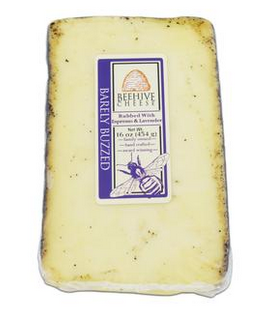
Beehive Cheese: “When you take a bite of Beehive Cheese, it melts like butter in your mouth. That’s because Beehive Cheese is made from the creamiest milk in Utah, meticulously crafted into superior cheese.” My personal favorite: Barely Buzzed, which is

[H]and-rubbed with the ‘Beehive Blend’ from Colorado Legacy Coffee Company, which is the cheesemakers’ brother.  Lavender buds are ground with the coffee. The rub imparts notes of butterscotch and caramel, which are prevalent near the rind, but find their way to the center of the cheese. This is a full-bodied cheese with a nutty flavor and smooth texture.

Screen Shot 2019-04-01 at 4.08.46 PM.png

You heard that right, this is lavender espresso cheese. You’re welcome.

(Want to see all the Inbox 5K Imbibe/Ingest recommendations? Here you go.)

You heard that right, this is lavender espresso cheese. You’re welcome.


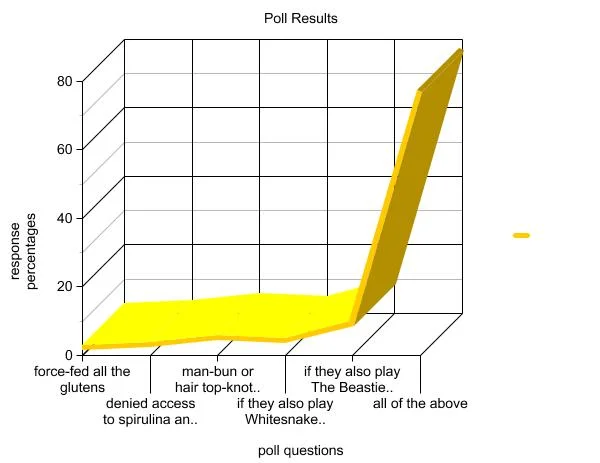
Follow up re Reader Poll, Sentence Appropriate to the Crime:

shttefan-472897-unsplash.jpg

Whitesnake, or the Beastie Boys?

According to Inbox 5K readers who took the last issue’s poll, the yoga instructor who shortens the term “sun salutation” to “SUN-SAL” deserves no mercy:

graph.jpg

Inbox 5K Note: endorsements, suggestions, and recommendations in Inbox 5K are unpaid unless indicated otherwise. I highlight and recommend things I like or find useful, in hope you might feel the same. Sometimes I’ll mention a company, product or service offered by a friend, acquaintance, or family; rest assured they’re not paying me or haven’t asked for placement here unless I tell you that’s the case.

Like what I’m doing? Enjoy Inbox 5K for free, guilt free. Want to donate? Twist my arm. OK, thanks!

Find me elsewhere:

denisehowell.info

Twitter

Instagram

0 Likes
tags / inbox5K, ai, drones, eucopyright, BEC, facebookcontentoversightboard, michaeltrainer, peakmind, projectcat, cleanenergy, renewableenergy, beehivecheese
Newer  /  Older